The Artist, His Demons and The Art - John Galliano: Horizons at The Met
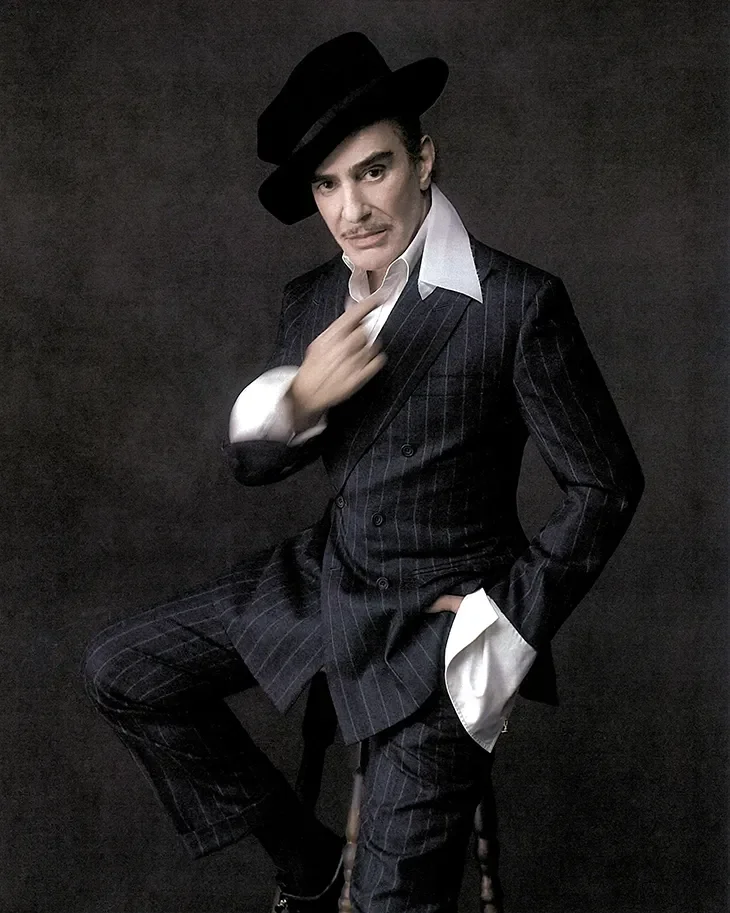
Modern museums have become some of the most important places in which to confront our cultural dilemmas. The one currently occupying my mind is this: how should we receive great art made by deeply flawed people?
On the 31st of July, The Metropolitan Museum of Art announced that John Galliano would be the subject of the spring 2027 Costume Institute’s exhibition, becoming only the third living designer to receive such an honour.
Fashion fiends have welcomed the announcement that one of the industries most revered designers will have his own retrospective. Galliano’s come back is widely known to have been orchestrated by Anna Wintour and despite the exhibition concept reportedly being rejected multiple times, the passage of time, his success at Maison Margiela and that documentary, have all played a part in bringing “John Galliano: Horizons”, to life.
The exhibition will be split into three movements, the first of which is titled “Bearings” and is designed to connect Galliano’s career and collections to historical and cultural events. This will be followed by “Horizon”, the movement which will map out his inspirations and lastly, "Atlas of Transformation”, an intimate look into the designer’s creative process.
The Met has confirmed that the first of these movements will create the framework to directly address the antisemitism, anti-Asian and racist conduct of Galliano which led to his unceremonious firing at Dior. The intent is good but ultimately, it’s hard to ignore that sanitising his story would have gone down like a led balloon so I’m not sure how much of an option they really had on that front.
As otherworldly as his work appears, Galliano’s racist and antisemitic tirade showed us his humanity, in all its ugliness. Whatever the motivation, it’s important that The Met explicitly stated that the exhibition will address this contentious topic.
Humans are inherently capable of extraordinary creativity and extraordinary cruelty, but how we react to that in the current age is unlike anything we’ve seen before.
In modern society, news of an individual’s abhorrent opinions, or salacious acts spread like wildfire and within minutes we have an overproduction of reactionary content to consume. The content produced, often reduces complex topics down to binary moral dilemmas, and the overwhelming amount of discourse can push institutions to remove music from problematic artists from streaming platforms, re-edit decades old movies, or simply scrub the internet of a works existence.
We have told ourselves that appreciating a piece of work means aligning ourselves fully with the artist and what they believe, therefore leaving us no room for a grey area. We must choose a side and then stand strong with that opinion, never wavering, always virtue signalling. What would be without our hills to die on?
The problem takes on a somehow more ignorant format within the gallery spaces of a museum, where the narratives are so curated and in celebration of technique or artistry that the moral complexity is omitted or reduced to a footnote if we’re lucky. Yet, an artist’s biography is inseparable from their artistic practice. Understanding their prejudices or politics shouldn’t diminish the work but change the lens through which we view it.
Museums are hardly temples to the sanctimonious and they have a duty to be venues that exhibit art honestly. We shouldn’t ignore the ugly but confront it head on, critically and carefully. How they handle the subject of his conduct will hopefully set the standard for other museums on how to deal with controversies from living artists, because if there is one thing that will remain true, it’s that people will think, do and say fucked up things.
We should know that Caravaggio killed a man, that Picasso was a misogynist, that Von Dutch was a vocal racist, and that Gabrielle Chanel was a Nazi sympathiser and tried (and failed) to use anti-semitic policies to her advantage. This should shape how we view the work, how we formulate our thoughts about it, how we interact with it and discuss it with others. We should feel compelled to sit with the uncomfortable and process our feelings towards it and not automatically feel we must distance ourselves from work because the self-righteous have told us we are bad, apathetic or dim if we do not. That we have chosen a side if we do not immediately rush to boycott the individual and whatever they produce.
We need to start normalising taking our time to think about things, come up with our own opinions, and then feel free to change them when we come across new information. To discuss these thoughts and opinions with others, offline and in a respectful manner – maybe we should just start reviving salons because society needs venues where we can come together face-to-face and talk about the issues that matter to us. We also need desperately to learn to disagree with respect and not just say words to that effect before insulting our sparring partner.
In the case of John Galliano, I think many fashion commentators feel they need to glaze over the designers conduct to celebrate him or quickly address it and never bring it up again because they did once, so that should be enough to signal that they are clued up. When will we finally admit that it’s okay to think his conduct was awful, to recognise that we don’t stand by anything he did (thankfully nor does he) and that there is room for the appreciation for his work, and the rejection of his behaviour.
The real value of this new exhibition is not that it will redeem Galliano or condemn him but that we are cordially invited to spend some time with the contradictions that live within him and ultimately within all of us. Museums should exist to deepen our understanding of art, of history and of humanity not to reassure us of our moral certainty.